

Templar Saga
Tempra ehf.
Tempra ehf. is a leader in the Icelandic market in the production of packaging for fresh fish exports and insulation for the construction industry from EPS. Tempra has extensive experience in advising customers on packaging and building insulation, as well as comprehensive knowledge of different operations and needs in solving various projects.
The CEO of Tempra ehf. is Magnús Bollason.
The activities
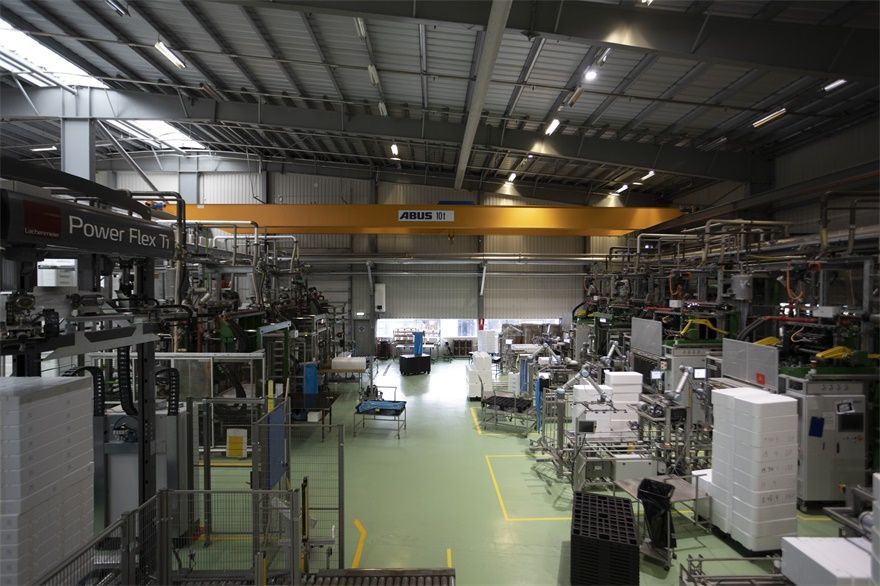
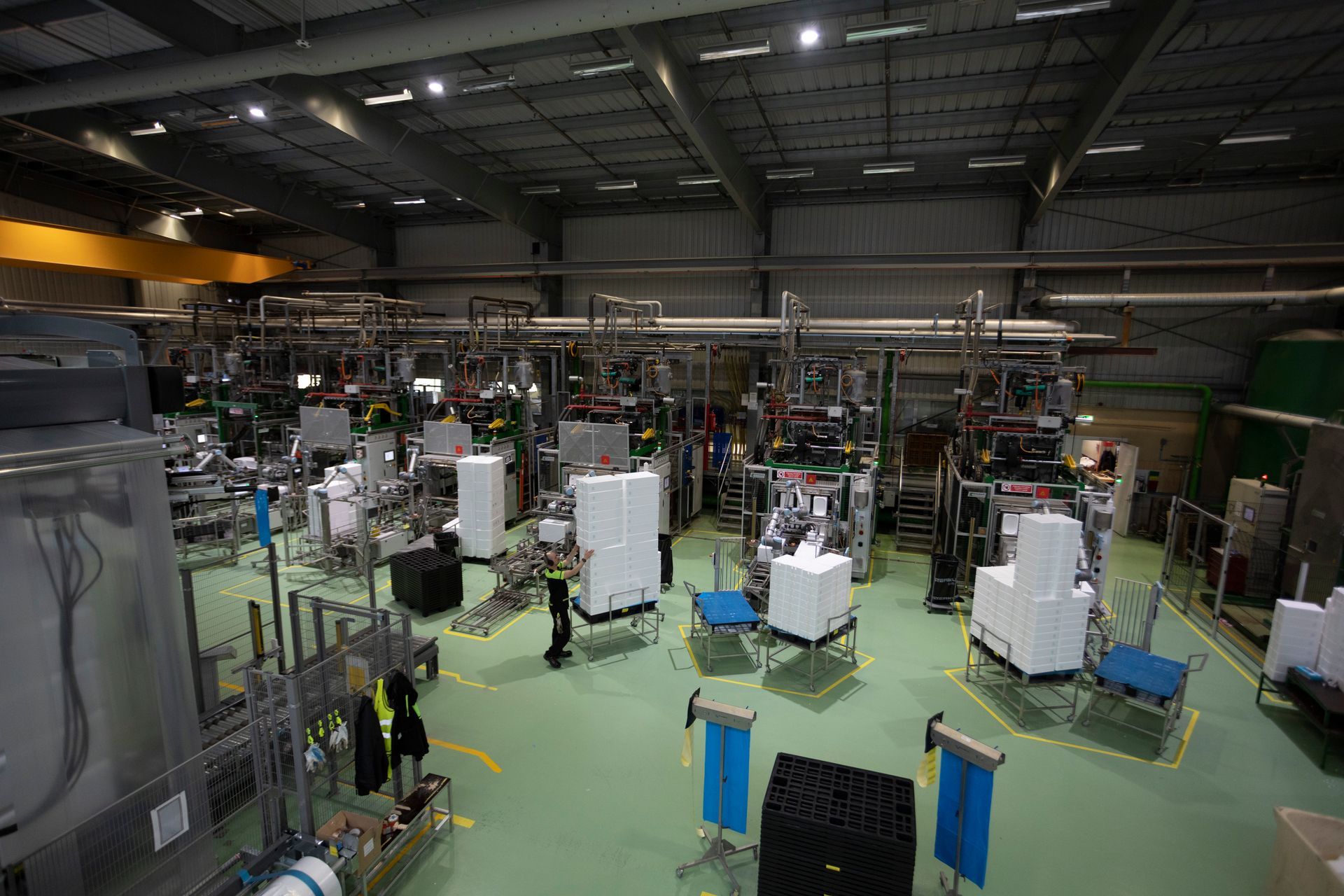
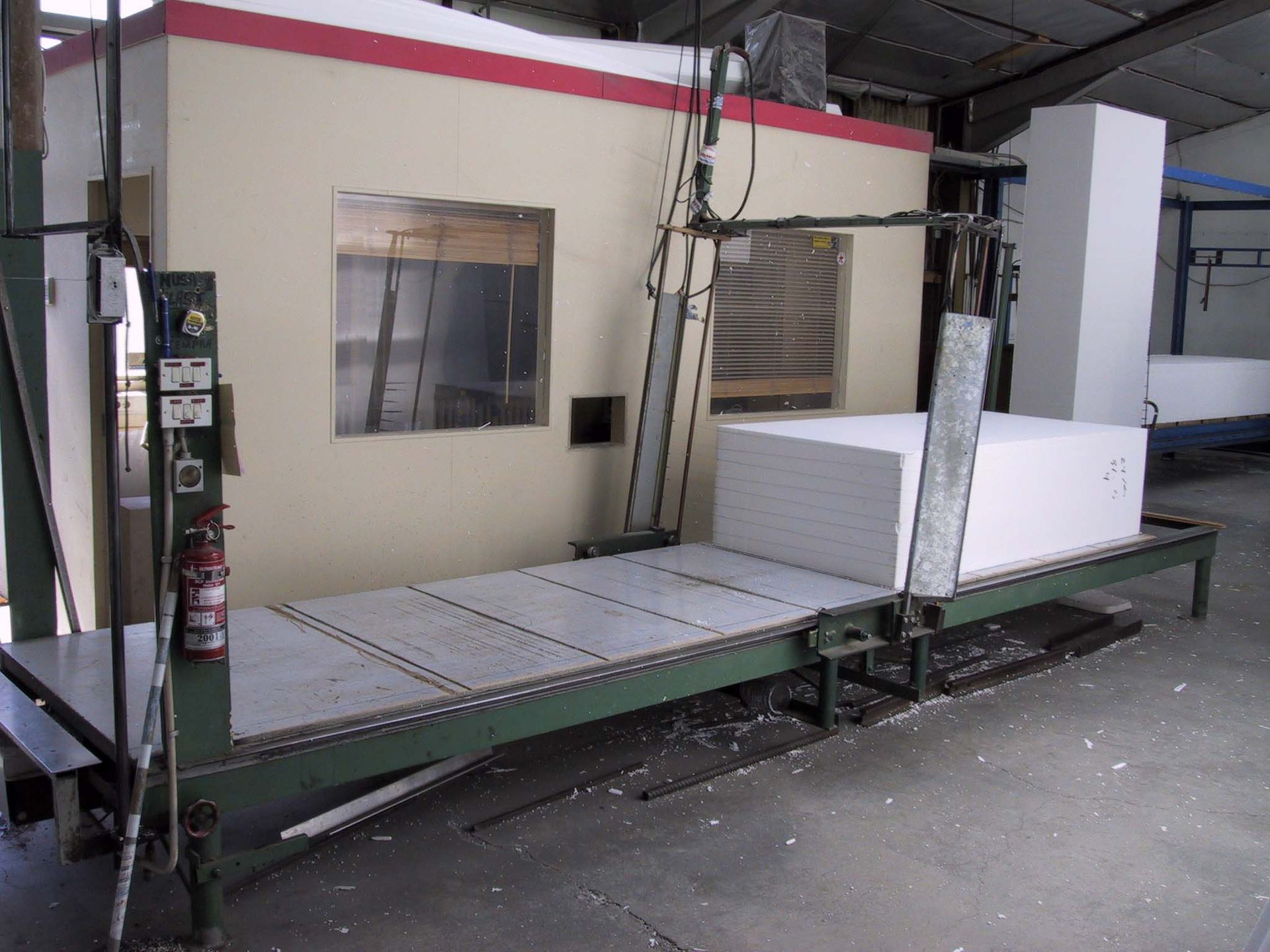
Tempra's production is divided into two main production lines, packaging production and insulation for buildings. In the packaging section, production is carried out around the clock, at least five days a week. Tempra has been a leader in automation, and in Tempra's production hall you can find 10 packaging machines with high automation that use 10 presses to assist employees with printing and stacking. In Tempra's building insulation section, there is one large block mold that produces three-meter-high foam blocks. These blocks, which total 3.6m3, are cut by an automatic cutting machine into insulation panels in various sizes for different building applications. In addition, the cutting machine can cut foam into a variety of patterns, whether they are sets for exhibitions or complex shapes for architects.
There are typically around 27 employees at Tempra, with four employees on each shift in packaging production, two working on insulation, and two in maintenance. There are typically around five employees in sales and service, and two in delivery.
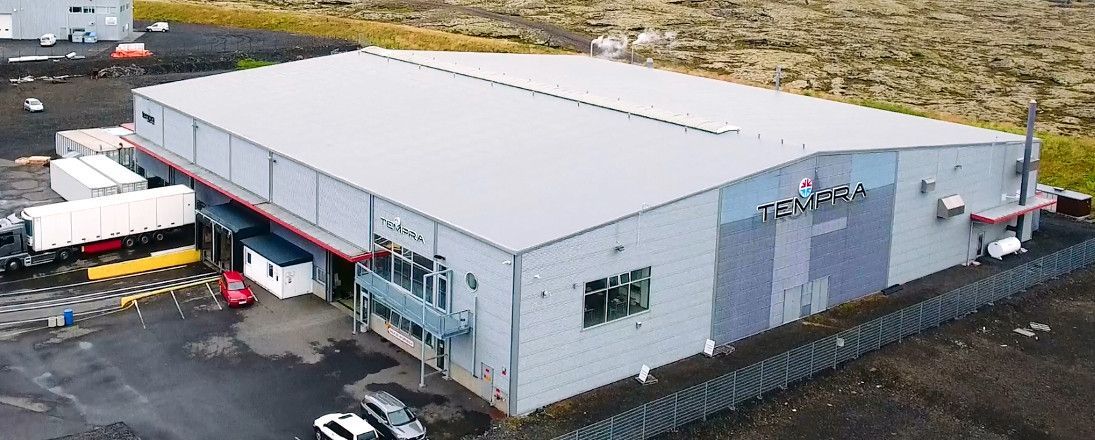
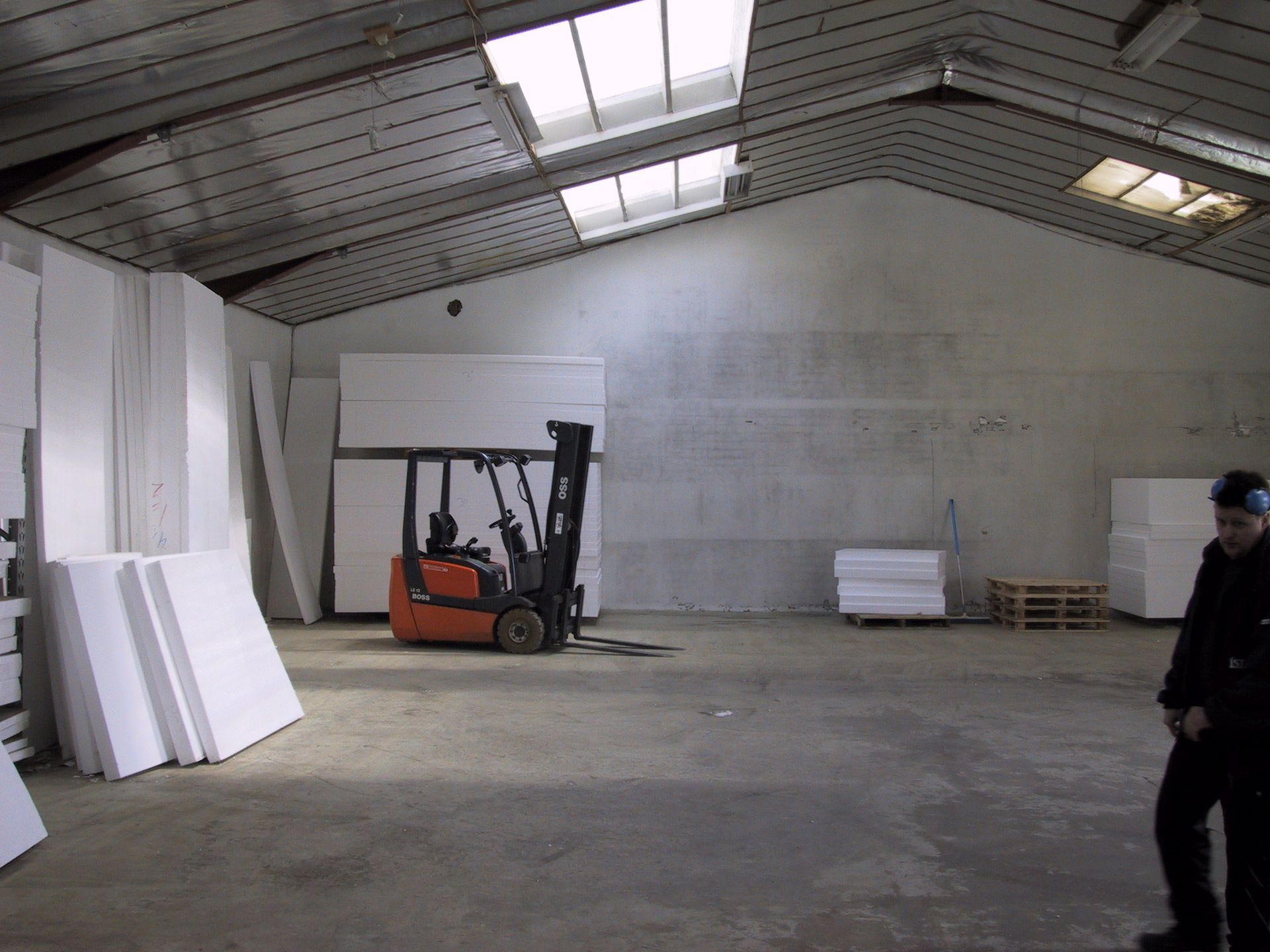
Tempra's factory premises are approximately 3500 sq m., with a warehouse covering approximately 1500 sq m. Tempra's operations require considerable warehouse space, as foam plastic is 98% air and the flow of goods is rapid.
The products and the environment
Packaging made from EPS material is extremely light compared to its volume and the weight it is intended to carry, being 98% air and only 2% plastic. It insulates well and maintains the optimum temperature of the product many times longer than, for example, cardboard packaging and corrugated plastic packaging. In addition, it is water-resistant and its white color repels heat radiation that could otherwise heat the contents. White color is also a great advantage when working with food, as it is easier to detect dirt on a white surface than on a dark one. EPS packaging is also strong compared to its weight, which is important when transporting products by air. EPS packaging is approved for use with all types of food and meets modern requirements. Most packaging from Tempra is available with printing, for example with the customer's or foreign buyer's brand. Manufacturing Temp
EPS is approximately 98% air and only about 2% plastic, composed of many tiny cells. Neither freon nor other harmful substances that cause the greenhouse effect are used in the production of insulating plastic. EPS is 100% recyclable, it does not irritate the skin on contact and no special equipment is required when working with it, as the EU technical committee (CENTC 88) has pointed out. The equipment used in production delivers maximum utilization of the raw material, little is wasted during production, as only water, steam and air are used. Packaging from Tempru and insulation made of EPS material do not pollute groundwater during use, production or disposal.
Whether it's keeping fish cold or houses warm, we know that our customers need to be able to rely on high-quality products and premium service. That's why Tempra ehf. has always placed great emphasis on innovation in the development of packaging and insulation in collaboration with our customers, universities and research institutes. All packaging is food-grade and all house insulation production is CE-certified and manufactured according to relevant European standards.
Sagan
Starstone
The company was founded in 1984 by Sigvald H. Pétursson and Kristnir Halldórsson and was named Stjörnusteinn, which may have been derived from a place name in Mosfellsbær.
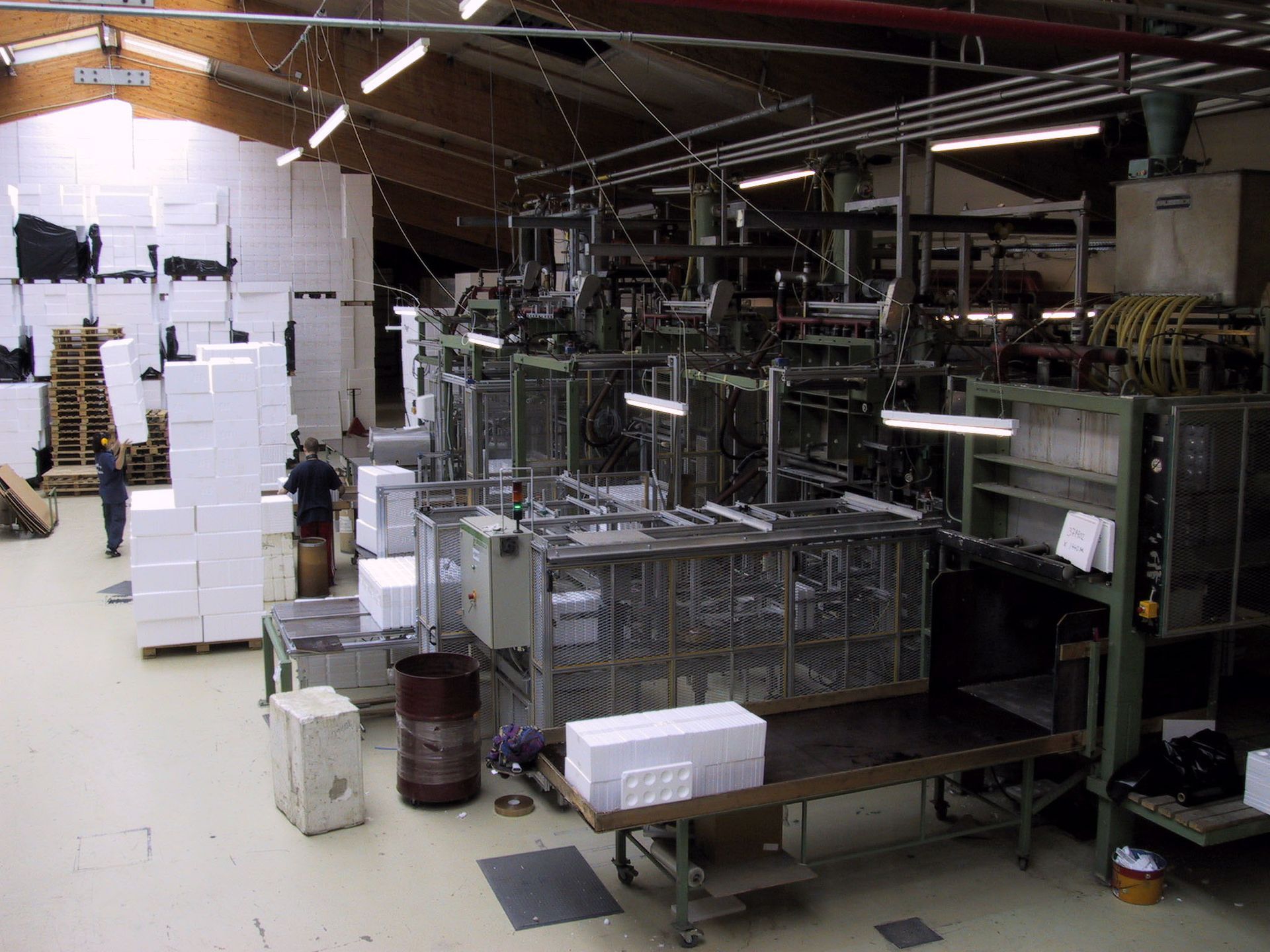
Kristinn and Sigvaldi were fellow students in the Fisheries Engineering department at the Icelandic Technical College during the years when the idea for the company was born. They had, among other things, worked together on a project for the Icelandic Fisheries Institute, which concerned the insurance assessment of the Icelandic fishing fleet. However, there is little doubt that the first ideas for establishing a foam plastic box factory arose during the Fisheries Engineering students' graduation trip to Norway. There, they learned about local fish farming, among other things. In Iceland, there were big plans for salmon farming at the time, and the partners saw a chance to develop packaging of a similar nature that was then gaining ground in Norway. Stjörnusteinn was founded as a partnership and the first equipment was purchased in the spring of 1984. The first box then came out of the partners' machine on New Year's Day 1984.
The salmon farming adventure, the first one, did not work out. It was not considered profitable for various reasons. In the first years, Stjörnustein's operations did not go as planned, and it was then tempting to bring in investors and convert some of the debt into equity. Venture capitalists then entered Stjörnustein's operations, including Frumkvæði (which was a venture capitalist on behalf of the Icelandic Industrialists' Association), O. Johnson & Kaaber, Hekla and Skeljungur. In the first years, the company's founders barely had a knife and spoon, as all energy and capital went into financing the company's operations and developing new products and services. Icelandic fish exports, whether from farming or fishing, were then, and still are, somewhat unique in that people either exported frozen or fresh in containers. Sigvaldi and Kristinn were able to change the course, i.e. they were suitable for the production of boxes for container export and, for example, kept the export of salted fish in containers alive in time. More importantly, they were fortunate enough to develop packaging that made it much easier and much cheaper to transport fresh fish by air. By then, a few forward-thinking people had begun to send fresh fish by air. 1993, however, proved difficult for the company. There was some loss-making, debts piled up, among other things, due to the default of the largest customers, and the liquidity position was extremely difficult. As a result, Sigvaldi bought his partner out of the business in late summer 1993. From 1995 onwards, things started to improve and a year later was the first year that dividends were paid to the owners, since then the road has been steadily upward.
Meat plaster
Founded in 1988 by Hannes Eyvindsson, Árni Eyvindsson and Júlíus Guðmundsson with the purchase of the family business of their father and their paternal uncles Hannes and Árni, Víbró ehf, which was founded in 1957.
Over 63 years ago, or in 1957, four progressive brothers in Kópavogur, Eyvindur, Böðvar, Gunnar and Gottfreð Árnasynir, began producing plastic insulation for house insulation in the company Vibró hf. It is interesting to note that the name Víbró comes from "Við bræðurnir".
The material “expanded polystyrene”, EPS, was a breakthrough from the older building insulation material which was mainly cork at the time. This new production took place in their premises at Dalvegur 24 in Kópavegur, which at that time was really far up in the “country”.
During these years and the following decade, more parties began to start similar production throughout Iceland. A large number of smaller factories were built in, among others, Bogarnes, Bolungarvík, Akureyri, Egilsstaðir, Vestmannaeyjar, Eyrarbakki, Selfoss, Hafnarfjörður, Akranes and in Reykjavík. The highest number reached 18 in the period 1970-1984. The reason that so many people were able to produce plastic insulation in Iceland was that many small machine shops with skilled craftsmen built Icelandic production molds to cast foam plastic blocks which were then sawn down into building insulation panels in band saws. For production, what is now a steam boiler was needed and there was a lot of knowledge about them in those years in Iceland. More equipment for production was also built in Iceland, e.g. preheaters and later cutting beds with hot wires to cut the blocks into insulation panels.
Over the next 25 years, insulating plastic became the main insulation material in Icelandic buildings, and thousands of homes in Iceland are insulated with this type of insulation. From 1985 onwards, the number of manufacturers of building insulation began to decline significantly when the Steinullarverksmiðja Sauðarkrókurs was built, competing with plastic manufacturers under very unfair competitive conditions at the time due to the involvement of the state and the municipality. That factory was operated at a loss year after year, but eventually managed to stay afloat with the help of the state and the municipality. Due to this tough competition, the number of foam plastic factories decreased significantly, and it is believed that their number has dropped to a minimum of five.
In 1988, the Vibró brothers decided to sell the factory and it was eventually sold to the sons of one of the brothers, Eyvindur, Árni and Hannes Eyvindsson, along with Júlíus Guðmundsson, an employee of Vibró. With the purchase, a new company was founded that was given the name Húsaplast ehf and that name became attached to that activity for many years after the company was later merged. It faced very tough competition from the state-run Steinullarverksmiðjan in Sauðárkrókur. In order to maintain its position in the competition with Steinullar, a period of corporate acquisitions began and from 1991 to 1999, Húsaplast ehf bought several other plastic factories, such as Fjarðarplast ehf, Skagaplast ehf, Varmaplast ehf and Ísplast ehf. These were absolutely necessary measures to maintain competition with Steinullarverksmiðjan.
Temper
In 1999, negotiations began on the merger of Húsaplast ehf in Kópavogur and Stjörnustein ehf, in Hafnarfjörður, to create the largest EPS factory in Iceland under the management of Hannes Eyvindsson and Páll Sigvaldason, son of Sigvalda Pétursson, who was then the second largest owner of Stjörnustein ehf. In 2000, Tempra ehf was established and at the same time the largest foam plastic factory in Iceland. It was time to build up and prepare to move the factories under one roof. Then, major steps were taken in automating the factories with the purchase of the latest types of production equipment for production. At the time of the merger, approximately two-thirds of the company's turnover was in building insulation, but in 2021, just over two-thirds of the company's turnover was in packaging. This significant growth in recent years is primarily based on ever-expanding markets, especially in salmon farming and a large increase in fresh fish exports. Machine cost has increased steadily with a corresponding increase, but since 2005 production in tons has tripled.
Tempra's ownership changed in 2007 when it became part of the Promens Group, but in 2015 it became part of RPC-Group, the largest plastic products manufacturer in Europe. That group merged with the American company Berry Global in 2019.
In mid-2022, Tempra became part of the Rotovia Group. Rotovia is an international manufacturing company with roots in Iceland and is currently owned by Icelandic investors. The company is one of the largest rotational molding companies in Europe, with ten production units in seven countries as well as an extensive sales network worldwide. It serves a diverse group of customers in different industries, with a particular focus on the food industry. The company's revenue can be divided into two relatively equal parts. On the one hand, revenue from the production and sale of components for manufacturers of commercial vehicles, agricultural equipment, wind turbines, cleaning machines and boats, and on the other hand, revenue from the production and sale of its own products, where two long-established Icelandic companies with a successful history weigh the most – Tempra and Sæplast.